


Mints, gum, and mouthwash can mask bad breath for a few minutes — but if the odor keeps coming back, you need to address the root cause, not just the symptom. Chronic halitosis affects roughly 1 in 4 people, and for most, it's a solvable problem with the right approach.
Here's a step-by-step guide to eliminating bad breath permanently, starting with the most common causes and working through the less obvious ones.
Step 1: Fix Your Oral Hygiene Routine
About 85% of bad breath originates in the mouth. Before looking at other causes, make sure your daily routine covers all the basics:
Brush Properly — Twice a Day, Two Minutes Each
Most people brush too quickly and miss key areas. Focus on the gumline, the backs of your teeth, and your molars. Use a soft-bristled brush or an electric toothbrush with a timer.
Floss Daily — Non-Negotiable
Food and bacteria trapped between teeth are a major source of odor. Flossing removes what your toothbrush can't reach. If traditional floss is difficult, use floss picks or a water flosser.
Clean Your Tongue — The Most Overlooked Step
Your tongue's rough surface harbors massive amounts of bacteria, dead cells, and food debris. Studies show that tongue cleaning alone can reduce volatile sulfur compounds (the chemicals that cause bad breath) by up to 75%. Use a dedicated tongue scraper or the back of your toothbrush every morning.
Replace Your Toothbrush
A worn-out toothbrush doesn't clean effectively. Replace it every 3 months or sooner if the bristles are frayed.
Step 2: Address Gum Disease
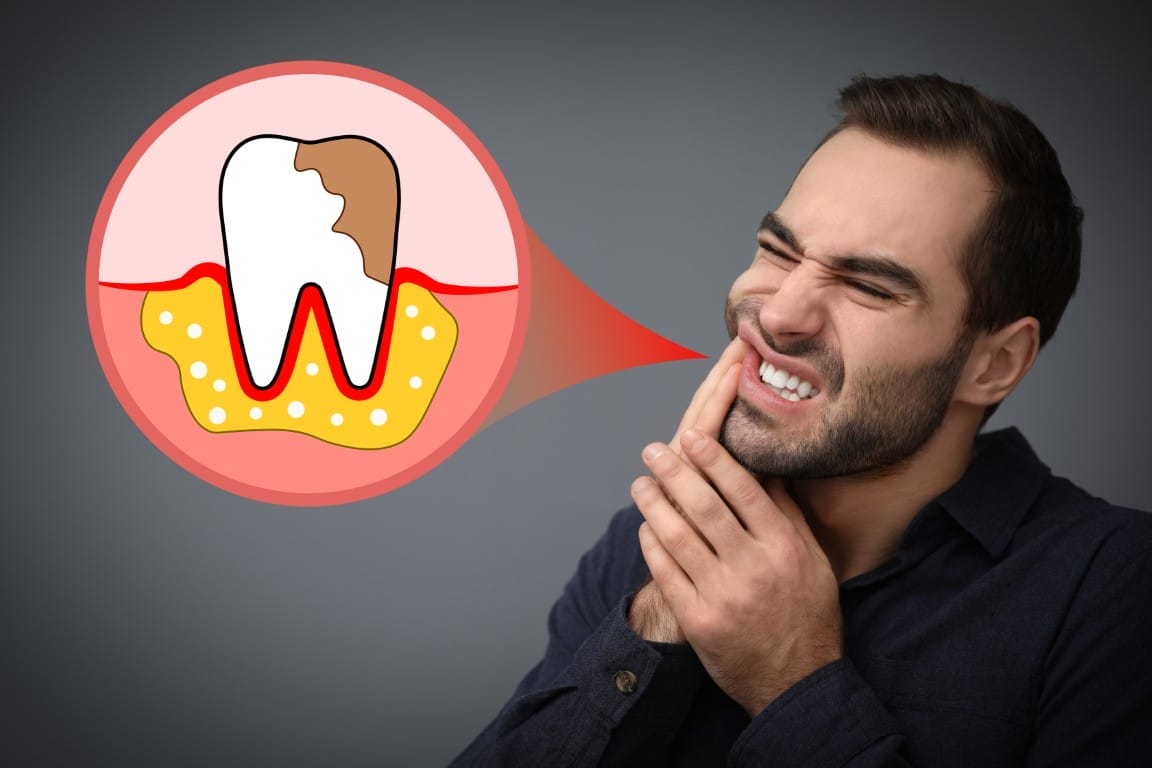
Gum disease (periodontitis) is one of the most common causes of persistent bad breath that doesn't respond to better brushing. The deep pockets that form between your teeth and gums harbor bacteria that produce sulfur compounds — and no amount of brushing or mouthwash can reach them.
Signs that gum disease might be causing your bad breath:
- Gums that bleed when you brush or floss
- Red, swollen, or tender gums
- Gums pulling away from your teeth
- Loose teeth or changes in your bite
Treatment ranges from deep cleaning (scaling and root planing) to more advanced periodontal therapy depending on severity.
Step 3: Check for Hidden Dental Problems
Several dental issues can cause bad breath even with excellent hygiene:
- Untreated cavities: Decay traps food and bacteria, producing odor
- Old or failing restorations: Worn-out fillings or crowns can develop gaps where bacteria accumulate
- Impacted wisdom teeth: Partially erupted wisdom teeth are notorious for trapping debris
- Oral infections: Abscesses and infected teeth produce distinctly foul odors
A thorough dental exam with X-rays can identify these hidden culprits.
Step 4: Address Dry Mouth
Saliva is your mouth's natural cleaning system. It washes away food particles, neutralizes acids, and fights bacteria. When saliva production drops, bacteria multiply rapidly and odor increases.
Common causes of dry mouth include:
- Medications (antidepressants, antihistamines, blood pressure drugs)
- Mouth breathing during sleep
- Dehydration
- Medical conditions (Sjogren's syndrome, diabetes)
Solutions: Drink water consistently throughout the day, chew sugar-free gum to stimulate saliva, use a humidifier at night if you mouth-breathe, and talk to your doctor about medication alternatives if applicable.
Step 5: Look Beyond the Mouth — Gut and Systemic Causes
When standard oral care doesn't resolve bad breath, the cause may be coming from deeper in the body:
Gut-Related Bad Breath
- Acid reflux (GERD): Stomach acid and undigested food particles travel up the esophagus, producing a sour or rotten odor
- H. pylori infection: This stomach bacterium is linked to both digestive issues and halitosis
- Small intestinal bacterial overgrowth (SIBO): Excess bacteria in the small intestine produce gases that can affect breath
Medical Conditions
- Diabetes: Can cause a fruity or acetone-like breath odor
- Kidney disease: May produce an ammonia-like smell
- Sinus infections and post-nasal drip: Mucus collecting at the back of the throat feeds bacteria and causes odor
If your dentist rules out all oral causes, a visit to your primary care physician or gastroenterologist may be the next step.
Step 6: Make Lasting Lifestyle Changes
- Quit smoking or tobacco: Tobacco dries out the mouth, damages gum tissue, and leaves its own persistent odor
- Limit odor-causing foods: Garlic, onions, coffee, and alcohol contribute to temporary and sometimes lingering bad breath
- Eat more fiber-rich foods: Crunchy fruits and vegetables like apples, celery, and carrots help clean teeth and stimulate saliva
- Stay hydrated: Aim for at least 8 glasses of water per day
Get Professional Help for Chronic Bad Breath
If you've tried everything above and your bad breath persists, you're not alone — and you don't have to keep living with it. At Acorn Family Dental Care in Berkeley, Dr. Teah Nguyen has experience diagnosing and treating chronic halitosis at its source.
We'll perform a comprehensive evaluation to identify exactly what's causing your bad breath and develop a treatment plan that provides lasting results — not temporary cover-ups.
Schedule your halitosis consultation today and take the first step toward fresh, confident breath.