


Loading ...

At Acorn Family Dental Care in Berkeley, Dr. Teah Nguyen has extensive experience diagnosing and treating teeth that require root canal therapy. Many patients don't realize they need a root canal until pain forces them to seek emergency care. However, understanding the warning signs can help you get treatment before the problem becomes severe.

This guide outlines the 6 most common signs that indicate you may need root canal therapy. If you experience any of these symptoms, contact us immediately at 510-848-0114 to schedule an evaluation.

80%

of root canals can be avoided with early detection

1000+

Root canal treatments performed by Dr. Nguyen

95%

Success rate for root canal therapy

6 Warning Signs You May Need Root Canal Therapy

1

Severe Toothache Pain

The most common sign of pulp infection is severe, persistent pain in the affected tooth. This pain is often described as:

  • Throbbing or pulsating: Pain that feels like it's beating in rhythm with your heartbeat
  • Sharp and shooting: Sudden stabbing sensations that come and go
  • Constant ache: Dull, unrelenting pain that doesn't respond to over-the-counter pain relievers
  • Worse at night: Pain that intensifies when lying down due to increased blood flow

Action: If you experience severe, persistent tooth pain, don't delay—contact Dr. Nguyen immediately. Severe pain indicates that the pulp is likely infected and requires urgent treatment.


2

Severe Sensitivity to Hot & Cold Temperatures

If your tooth has extreme sensitivity to hot or cold drinks and foods—or if the pain from temperature extremes lingers long after the stimulus is removed—this is a red flag for pulp inflammation or infection.

Examples of temperature sensitivity:

  • Drinking hot coffee causes sharp pain that lingers for minutes
  • Ice cream or cold water triggers intense, shooting pain
  • The pain persists even after removing the hot or cold stimulus

Normal tooth sensitivity (from exposed dentin) typically resolves within seconds after the stimulus is removed. If sensitivity lingers or is extreme, the pulp is likely affected.

Important: Schedule an exam with Dr. Nguyen to determine if the sensitivity is from a cavity, gum recession, or pulp infection—each requires different treatment.

3

Swollen or Tender Gums

When a tooth's pulp becomes infected, the body's immune system responds with inflammation. This often results in localized swelling and tenderness of the gums around the affected tooth.

Signs of swelling:

  • Visible puffiness around one tooth
  • Gums are tender to touch
  • Swelling on the face or jaw
  • Drainage or small pimple-like bump on the gum

What this means:

This type of localized swelling indicates an abscess—a pocket of infection and pus. An abscess is a serious sign that the pulp is severely infected and treatment is needed urgently.

If you see a pimple-like bump on your gum, seek treatment immediately.

4

Tooth Discoloration or Darkening

When the pulp dies or begins to die from infection, the tooth often changes color. A tooth needing root canal therapy may appear:

  • Greyish or yellowish: Darker than surrounding teeth
  • Blackened or brown: Especially in advanced cases with pulp necrosis
  • Noticeably dull: Lacking the shine of healthy teeth

Note: Discoloration alone doesn't always mean a root canal is needed—staining from lifestyle factors (coffee, wine, tobacco) is common. However, discoloration combined with other symptoms suggests pulp death.

Dr. Nguyen will use X-rays and examination to confirm whether discoloration indicates pulp infection or is cosmetic staining.

5

Pain When Chewing or Biting

If a tooth is extremely painful when you bite down or chew on it, this often indicates pulp inflammation or infection. The pain may be:

  • Sharp and immediate: Triggered by biting or chewing pressure
  • Lingering: Pain that continues after you stop chewing
  • Severe enough to avoid chewing: You favor the other side of your mouth

Why chewing causes pain:

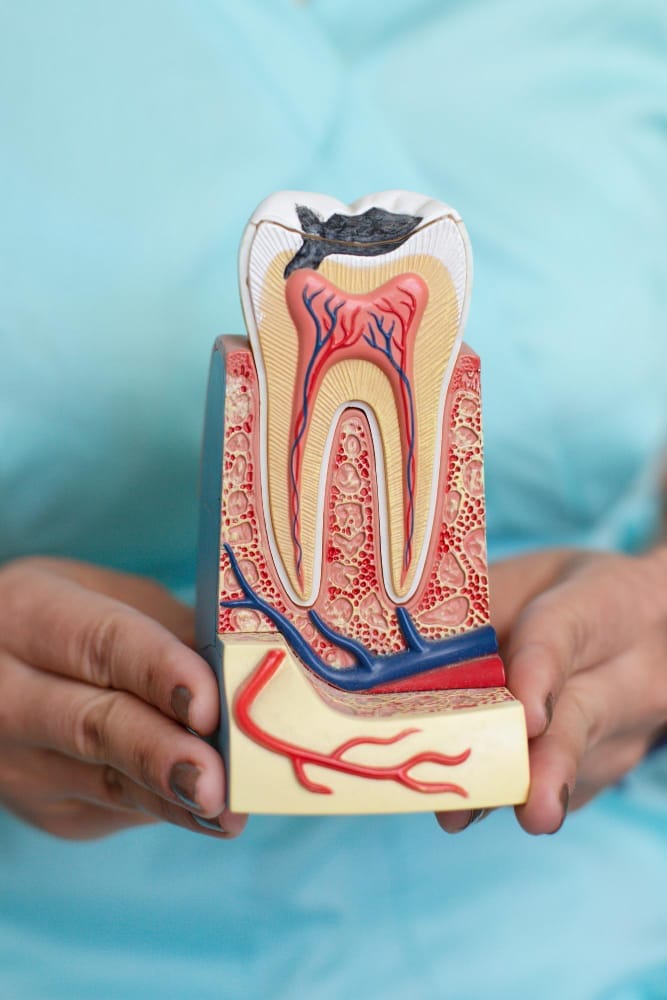
When you bite down on a tooth with an infected pulp, the pressure forces inflammatory fluid and bacteria deeper into the pulp chamber and surrounding tissues, causing sharp pain. This indicates the tooth structure is under stress and the pulp is severely irritated.

URGENT
6

Loose or Mobile Tooth

If a tooth feels loose or moves when you touch it with your tongue or finger, this is a serious warning sign that the pulp infection has spread to the surrounding bone and periodontal tissues.

Why tooth mobility matters:

Teeth are held in place by the periodontal ligament and bone. When an infected pulp spreads infection into these supporting tissues, bone loss occurs, causing the tooth to become loose.

A loose tooth from infection requires immediate treatment to save it.

Contact Dr. Nguyen immediately at 510-848-0114 if you notice tooth mobility. The sooner root canal therapy is performed, the better the chances of saving the tooth.

When to Seek Emergency Dental Care

You should seek emergency care immediately (today or tonight) if you experience:

  • Severe, unbearable tooth pain that doesn't respond to pain medication
  • Visible swelling in your jaw or face from a dental infection
  • Fever combined with tooth pain (sign infection is spreading)
  • A pimple-like bump on your gum (abscess)
  • Difficulty swallowing or breathing (rare but serious)

Call Acorn Family Dental Care at 510-848-0114 immediately. Dr. Nguyen offers same-day emergency appointments for urgent dental needs. If we're unavailable, go to an emergency room.

Next Steps: Diagnosis & Treatment

If you're experiencing any of these warning signs, here's what to expect:

1

Schedule an Emergency Exam

Call 510-848-0114 to schedule an evaluation. We offer same-day appointments for patients with symptoms of pulp infection.

2

Digital X-rays & Examination

Dr. Nguyen will take digital X-rays and examine the tooth to confirm whether root canal therapy is needed or if another treatment would be more appropriate.

3

Treatment Discussion

We'll discuss your options, including root canal therapy, alternatives to root canal therapy, or other treatments.

4

Root Canal Therapy (if indicated)

If root canal therapy is needed, we'll schedule the treatment and explain what to expect during the procedure.

Related Services

Once root canal therapy is complete, you may also benefit from:

Dental Crowns

After root canal therapy, a crown protects the tooth and restores its strength.

Learn about dental crowns →

Oral Exams & Cleanings

Regular checkups help detect problems early and prevent future infections.

Schedule an exam →

Frequently Asked Questions

Question & Answer

Nothing matters more than the trust and confidence of our patients. Here’s what they share about their experience withAcorn Family Dental Care Dental:

Don't Delay Treatment

If you're experiencing any warning signs of a tooth needing root canal therapy, contact Acorn Family Dental Care today for an urgent evaluation.

Free Dental Checkup

Book your dental appointment in Berkeley, CA, and discover why patients trust us for lasting, confident smiles.

Phone Icon

Call us at

+1 510-848-0114

98%

Our Patient Care Retention Rate.

ImageImage

Book Appointment

Schedule your visit in seconds