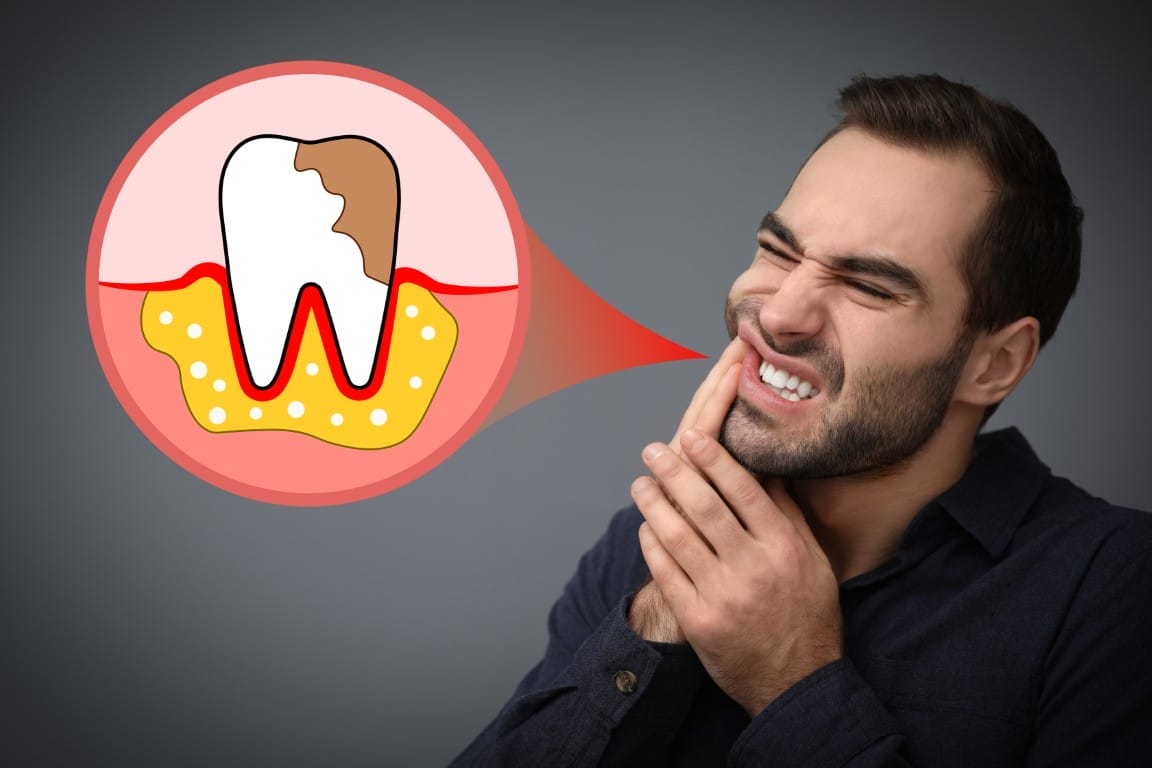


Your tongue finds a jagged edge where a smooth crown used to be. Your mind starts racing — Is this going to hurt? What do I eat? Can it wait until tomorrow?
Take a breath. A crown coming loose is one of the most common dental situations we handle at Acorn Family Dental Care. It almost never becomes a serious emergency — as long as you act quickly. Here’s exactly what to do, step by step.
Crown fell off? Call us at (510) 848-0114. We reserve same-day appointments for situations like this.
Step 1: Find the Crown and Keep It Safe
The first thing to do is locate the crown. Check your mouth carefully — if you haven’t swallowed it (it happens, but it’s rare), it may still be there or nearby. Check your napkin, your food, the sink.
Once you’ve found it:
- Rinse it gently under cool water. Don’t scrub it or use soap.
- Store it in a small zip-lock bag or a clean container.
- Bring it to your appointment. In many cases, your dentist can re-cement the same crown — no new one needs to be made, which saves you time and cost.
What if you swallowed it? Don’t panic. Dental crowns are small and smooth. The vast majority pass through the digestive system without any issue. Let your dentist know when you call so they can plan accordingly.
Step 2: Protect the Exposed Tooth Until Your Appointment
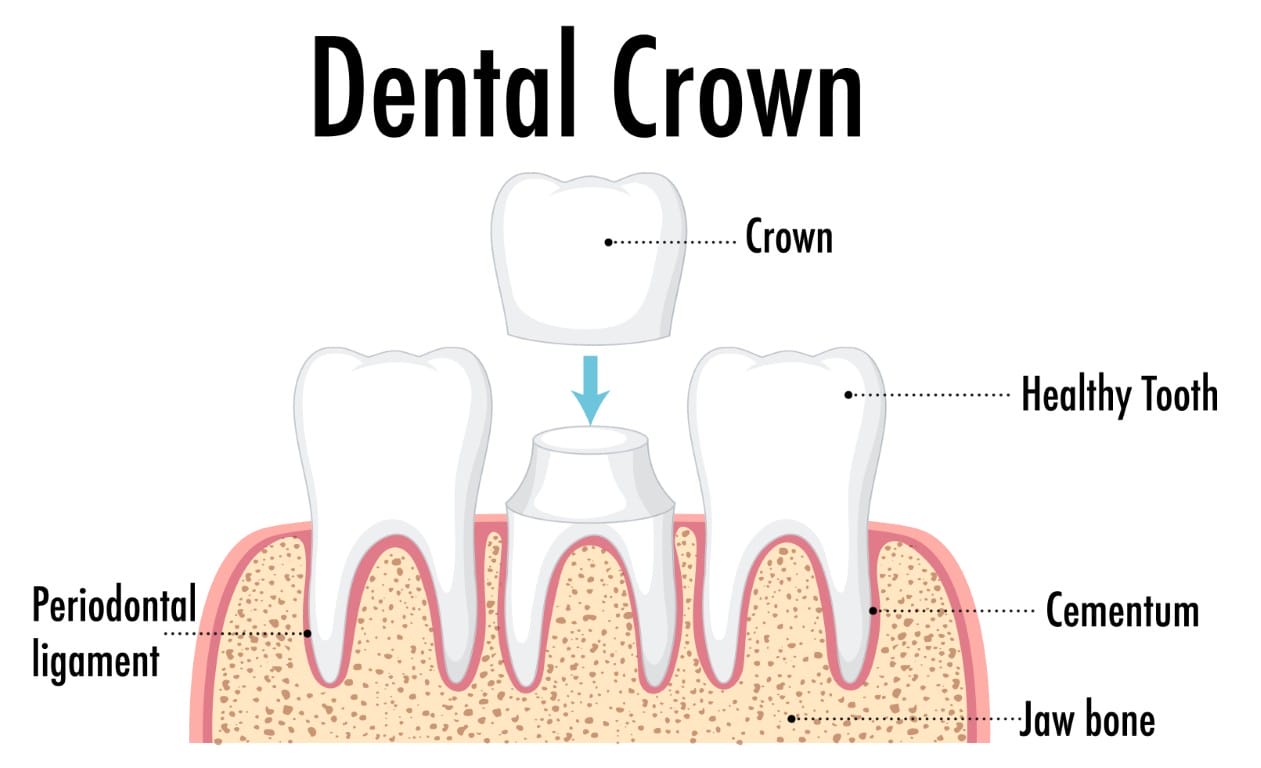
A tooth that’s been prepared for a crown — filed down to accept the restoration — is more vulnerable than a natural tooth. Without the crown sitting over it, you may notice sensitivity to heat, cold, sweet foods, or even air. Here’s how to stay comfortable until you’re seen:
Avoid chewing on that side. Use the opposite side of your mouth and stick to soft foods. Avoid anything sticky (gum, caramel, chewy candy) — it can aggravate the exposed area or dislodge any temporary protection you put in place.
Use over-the-counter dental cement. Products like Dentemp or RecemIt are available at most pharmacies without a prescription. After drying the tooth with a tissue, apply a small amount of cement to the exposed surface — or use it to temporarily re-seat the crown itself. This won’t hold under normal chewing forces long-term, but it can meaningfully reduce sensitivity until your appointment.
Dental wax works in a pinch. If you don’t have cement on hand, orthodontic wax pressed gently over the exposed tooth provides a temporary barrier against air and temperature.
Avoid temperature extremes. Skip very hot coffee, iced drinks, and anything sugary or acidic until your tooth is protected again.
Take OTC pain relief if needed. Ibuprofen or acetaminophen (per package dosing) can reduce any discomfort while you wait.
Step 3: Call Your Dentist Right Away
This step is not optional. A crown off needs professional attention — ideally within 24 to 48 hours.
The tooth underneath your crown has been shaped (prepared) to accept it. That means the enamel layer is thinner than on a natural tooth. Left unprotected, it’s at real risk for:
- Decay — bacteria reach the tooth surface faster than you might expect
- Fracture — a prepared tooth without its crown can crack under normal biting pressure
- Sensitivity and pain — especially when the nerve is near the surface
- Tooth shifting — neighboring and opposing teeth can migrate toward an open space surprisingly quickly
The longer you wait, the greater the chance that re-cementing the old crown is no longer an option — and that more involved treatment is needed.
At Acorn Family Dental Care in Berkeley, we set aside time in our schedule for crown emergencies. Call (510) 848-0114 and let us know your crown has come off. We’ll get you in as quickly as possible.
Will the Old Crown Be Re-Cemented or Replaced?
This depends on the condition of both the crown and the tooth underneath it.
Your old crown can often be re-cemented when:
- It’s structurally intact — no cracks, chips, or distortion
- The underlying tooth is healthy
- The crown seats firmly without rocking or visible gaps
A new crown is typically needed when:
- The existing crown is cracked, chipped, or warped
- There’s new decay on the tooth that must be treated first
- Neighboring teeth have shifted, changing the fit
- The crown is significantly worn after years of use
Your dentist will examine both the crown and the prepared tooth — often with an X-ray — before making a recommendation. You’ll know exactly what’s happening and why before any treatment begins.
Why Did My Crown Fall Off?
Crowns are designed to last 10–15 years or more, but they can loosen for a handful of reasons:
- Weakened cement — the bonding material breaks down over time, especially under the repeated forces of chewing
- Decay under the crown — bacteria can work their way in around the margins and compromise the tooth structure, causing the crown to rock loose
- Biting hard or sticky foods — ice, hard candy, and sticky foods apply stress directly to the crown-tooth bond
- Teeth grinding (bruxism) — nighttime grinding puts significant, sustained force on crowns and can wear through the cement over years
- An ill-fitting crown — less common with modern technology, but a crown that wasn’t precisely fitted can work itself loose over time
If this is the second time a crown has come off the same tooth, mention that when you call. It may point to an underlying issue — untreated decay, a grinding habit, or a bite problem — that needs to be addressed, not just re-cemented.
What to Expect at Your Appointment
Here’s what a typical crown emergency appointment looks like:
- Examination — Your dentist checks both the crown and the underlying tooth, usually with an X-ray, to assess for damage or decay.
- Cleaning — The tooth and the crown are cleaned, and old cement is removed from both surfaces.
- Treatment of any decay — If decay is found under the crown, it’s treated before anything goes back on.
- Re-cementation or temporary crown — If the old crown is sound, it’s bonded back in place with fresh cement. If a new crown is needed, a temporary is placed while the permanent restoration is fabricated.
- Bite check — Your bite is carefully evaluated and adjusted so everything fits together correctly.
Most re-cementation visits take under 30 minutes. If dental anxiety is a factor for you, we offer nitrous oxide sedation to take the edge off — just mention it when you call.
For more on what crown treatment involves, visit our dental crowns service page.
Frequently Asked Questions
Can I re-cement the crown myself at home?
Pharmacy dental cement (Dentemp, RecemIt) is a safe, short-term option for reducing sensitivity and protecting the tooth until your appointment. It is not a permanent fix — it isn’t strong enough to hold under real chewing forces, and it won’t address any underlying issue like decay. Use it to buy time, then call us.
How much does re-cementing a crown cost?
Re-cementation is typically a straightforward, lower-cost procedure compared to fabricating a new crown. Many dental insurance plans cover it as a restorative service. Our team will give you a clear cost estimate before any treatment begins. See our crown cost guide for a general overview.
My crown fell off but it doesn’t hurt. Do I still need to call?
Yes. No pain doesn’t mean the tooth is fine — it means the nerve hasn’t been exposed or irritated yet. The tooth is still vulnerable to decay and fracture, and those problems are significantly harder to fix than a simple re-cement.
How long can I wait before getting the crown re-attached?
Try to be seen within 24–48 hours. Pharmacy cement can buy you a couple of extra days in a genuine scheduling pinch, but don’t let it go longer than that. Every day without a crown is a day the underlying tooth is at risk.
The crown came off and part of the tooth came with it. What now?
Call us right away — don’t wait. A fractured underlying tooth changes the treatment plan. Depending on how much tooth structure remains, options may include a crown with a build-up, a root canal and crown, or in some cases extraction and implant placement. We’ll assess everything at your appointment and walk you through every option clearly.
Get Seen Today in Berkeley
A crown coming loose is stressful — but it’s very manageable when you act quickly. Save the crown, protect the tooth, and call us. Our team at Acorn Family Dental Care handles crown emergencies regularly, and we’ll take care of you the same way we take care of every patient: calmly, thoroughly, and without pressure.
Call (510) 848-0114 or book online. We offer same-day appointments for dental emergencies in Berkeley, Oakland, Albany, and the surrounding East Bay.